
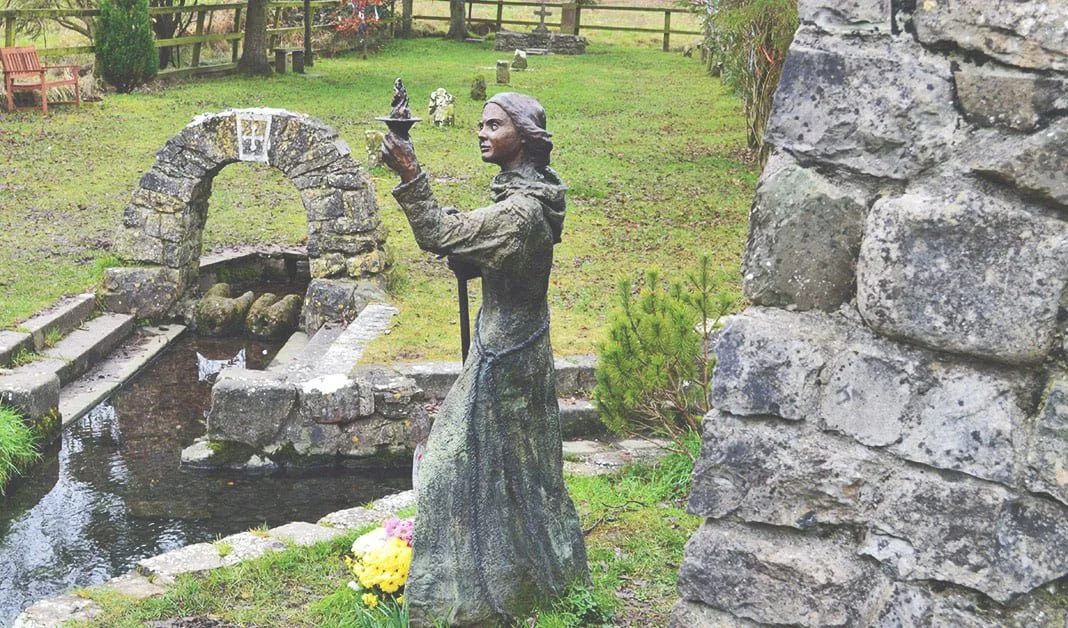
Ord Brighideach
LADY OF THE PERPETUAL FLAME AND SACRED WELLS,WE SEEK YOU.

The Flame Of Brighid
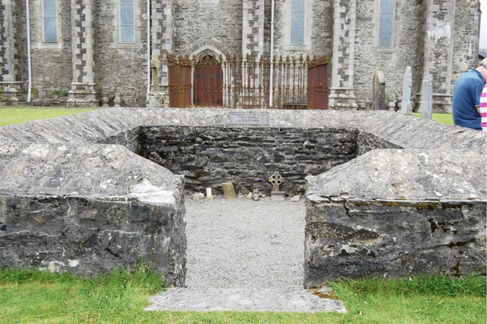
Located on the northern side of St. Brighid's Cathedral in Kildare, are the restored remnants of the ancient fire temple dedicated to Brighid.
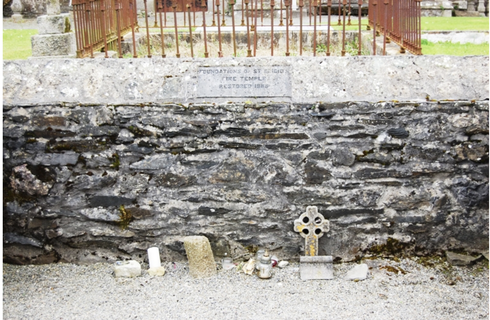
Remnants from the old Abbey
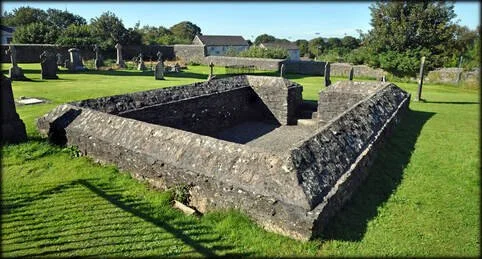
The foundations of the Fire Temple
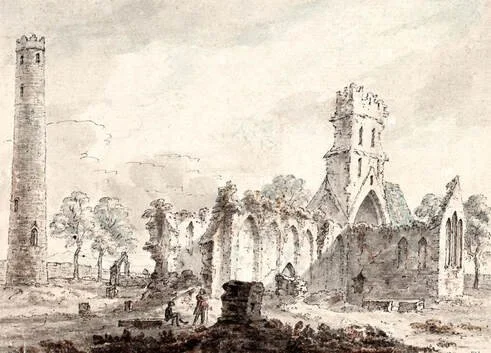
Kildare Cathedral in Ruin. (John Dawson, c. 1780, NLI)
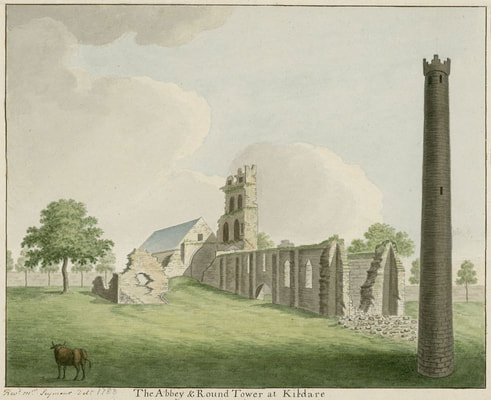
The Abbey and Round Tower at Kildare. Note the ruins of the Fire Temple to the left. (Rev. Mr. Seymour, 1783, Beranger Collection, UCD)
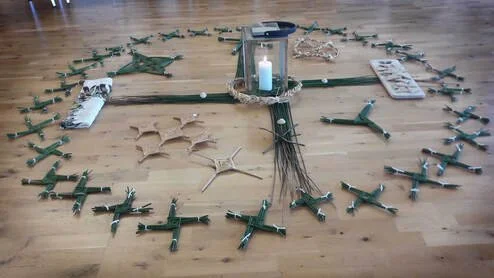
The Perpetual Flame at Solas Bhride
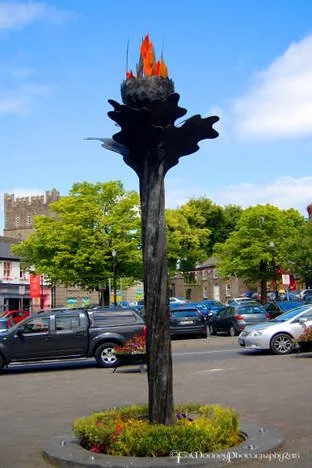
The Perpetual Flame sculpture located in Kildare's town square.
The Flame of Brighid is one of the most enduring sacred traditions in Ireland, carried across centuries through profound cultural and spiritual change. The stories of Brighid as Goddess and Brighid as Christian Saint are deeply intertwined, making it difficult to draw clear lines between myth, history, and devotion. Rather than replacing one another, these layers reflect continuity — an ancient reverence carried forward in evolving forms.
Brighid is remembered as the daughter of the Dagda and a prominent figure among the Tuatha Dé Danann. She is traditionally associated with fire, poetry, healing, childbirth, and the creative arts. Long before written history, she was honored through flame — a living symbol of inspiration, protection, and renewal.
According to tradition, Brighid’s sacred flame was tended at Kildare, Ireland, by nineteen women who kept continuous vigil. Each woman held watch for a single day, while the twentieth day was reserved for Brighid herself. This rhythm — nineteen tenders and the Goddess on the twentieth day — became a defining feature of the flame tradition.
The number nineteen was not arbitrary. In pre-Christian cosmology, it marked a sacred lunar rhythm — a cycle through which the phases of the moon return to their original alignment after nineteen years. This understanding of time shaped ritual and devotion, placing the tending of sacred fire within a wider cosmology of renewal and return.
Kildare and the Perpetual Flame
By the fifth century, a Christian monastery was established at the site formerly known as Druim Criaidh, later called Cill Dara — the Church of the Oak. Rather than extinguishing the flame, the Christian community carried it forward. The fire came to represent the light of Christ, while retaining its ancient rhythm of care.
Nineteen nuns, known as the Daughters of the Flame, continued the vigil, each tending the fire for one day. On the twentieth day, the vigil was left to Saint Brighid herself. The flame was never permitted to go out.
In the twelfth century, the Welsh chronicler Giraldus Cambrensis recorded that the flame was still burning at Kildare, tended by twenty women. He noted that although ashes were never removed, they never appeared to accumulate — a detail that added to the sense of sacred mystery surrounding the vigil.
The Flame in Christian Times
Tradition held that the flame was fiercely protected. Men were forbidden to cross the boundary that surrounded it, and stories tell of serious consequence for those who attempted to do so. One such tale recounts a man who tried to breach the enclosure and was pulled back by his companions — yet the leg that crossed the threshold was left injured, marking the gravity of the boundary he had violated.
Whether understood as history or myth, these stories speak to the sanctity of the flame and the seriousness with which its tending was regarded. The vigil was not symbolic alone; it was a responsibility held with reverence and care.
Sacred Boundaries
In the thirteenth century, church authorities challenged the independence of the Abbey of Saint Brighid. When the nuns refused male oversight, the perpetual flame was condemned as a remnant of paganism and ordered extinguished. Although the local community rekindled it, the flame would not survive the widespread suppression of monasteries under King Henry VIII in the sixteenth century.
With the dissolution of the monasteries, the Flame of Brighid was extinguished — but it was not forgotten.
Suppression and Survival
In 1988, archaeological remains believed to mark the original temple site were restored at Kildare. Five years later, during a conference honoring Brighid’s legacy, the Eternal Flame was ceremonially rekindled in Kildare’s Market Square. From that moment on, the Brigidine Sisters began tending the flame at their center, Solas Bhríde — the Light of Brighid.
Around the same time, a small devotional group known as the Daughters of the Flame began nurturing their own flames in honor of Brighid. From this lineage, and with blessing freely given, Ord Brighideach was later founded — continuing the rhythm of
The Flame Rekindled